Small Patio, Big Quote: Where Mini-Job Paving Costs Actually Come From
Ask for a price on a 6m² patio and a 60m² patio and the small one will often come back at a startling rate per square metre. The larger job might land at £90 to £120 per m² installed. The tiny one can look nearer £160 or £200 per m², even when the specification is identical. Homeowners understandably smell a rat. Sometimes there is one. More often, the quote is revealing something less sinister and more structural: small paving jobs do not scale down neatly.
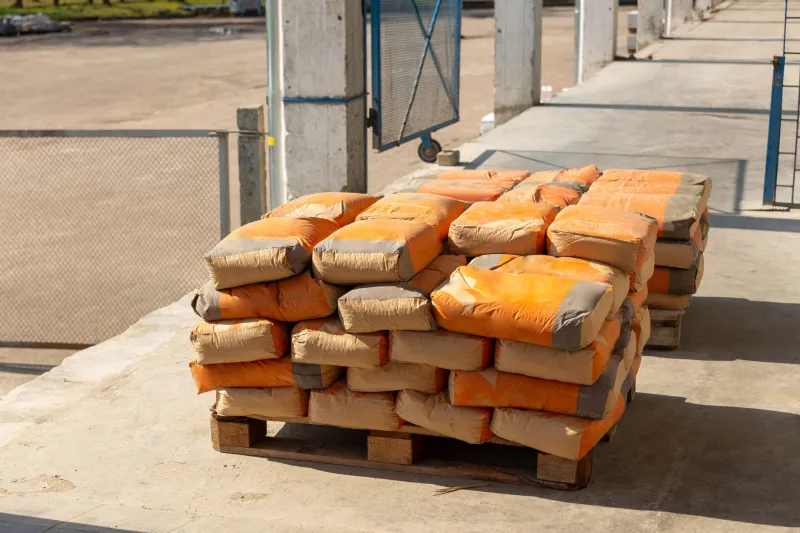
This is the half-bag problem in action. You need a bit of cement, a bit of sand, a part-pack of slabs and a short delivery. The merchant cannot sell you a bit of anything without charging for the whole unit, and the contractor cannot absorb the leftovers for free. The result is a quote that looks inflated until you unpack where the money actually went.
Small jobs do not scale down like a photograph
A big patio spreads fixed costs across hundreds of square metres. A small patio spreads the same costs across a handful. The mixer still has to be loaded, the tools still have to arrive, the skip still has a minimum charge, and somebody still has to spend half a day setting out and checking levels before a single slab is laid. None of that shrinks just because the finished area is the size of a decent shed.
The mistake is comparing the small job to the big job on price per square metre alone. A better comparison is the total cost against the value of having a usable path, a tidy back door step or a proper bin store. That does not mean accepting any number. It means reading the number in the right context.
The half-bag problem, explained without the chemistry
Paving work uses materials that are sold in units larger than most small jobs need. A 25kg bag of cement might be opened for a few mixing batches and then sit in the garage going lumpy. A bulk bag of sharp sand covers far more bedding than a 5m² patio requires. Mortar for joints comes in tubs or bags that do not divide neatly by the square metre. Even sealant and primer are often sold in quantities that assume a bigger project.
The merchant is not being awkward. It costs money to split a bulk bag, repackage a part-load or hold odd quantities on a shelf. So the price you see for a small job often includes the full unit, not the fraction used. The contractor might pass that on directly, absorb some of it into the labour rate, or add a small materials allowance. All three are legitimate; what matters is whether the quote shows you which one is happening.
Where the overages hide on a small quote
Minimum pack sizes are the first hiding place. Slabs are commonly sold by the pack, and a pack might cover 10.8m² or 15m². If you need 6m², you may be paying for nearly twice the area unless the merchant sells singles at a premium. That surplus is not automatically waste. It can be kept as spares for future repairs, which is genuinely useful. But you should know whether you are buying it and who owns it afterwards.
Part-load delivery is the second. A full lorry load is efficient; a pallet of slabs and two bulk bags sent to a residential street is not. Many merchants apply a minimum delivery charge or a part-load fee, and that cost lands somewhere in the quote. It is not a scam, but it is a fixed cost that hits small jobs harder.
Waste allowances are the third. A standard allowance of five to ten per cent is normal on paving, because cuts, breakages and pattern edges all consume material. On a large job that percentage is spread thinly. On a tiny job with steps, angles and a tight cutting pattern, the true waste can be higher. A quote that shows a clear waste figure is easier to trust than one that hides it inside a lump sum.
Plant and disposal minimums are the fourth. A skip has a minimum size and a minimum charge. A mini-digger may have a half-day rate that is not much cheaper than a full day. Muck away is priced by the load, and a small load still needs a lorry. These are real costs, not padding, but they can make a modest patio look expensive beside a larger one where the same skip is shared with other work.
Fixed costs are real, even on a path
There is a temptation to believe that a two-day job should cost two-fifths of a five-day job. It does not work that way. The first day on any paving job is mostly setting up, setting out and getting the levels right. The last day is mostly cleaning, pointing and clearing away. Those days do not shrink in proportion to the area. On a small job they can be a larger share of the total than the slabs themselves.
This is why a contractor who is already working nearby may quote less than one making a special trip. It is also why a very cheap small-job quote deserves a second look. Someone may be skipping the sub-base, skimping on the bedding or leaving you to deal with the surplus. A low price is only good value if the job underneath it is sound.
How to compare two small-job quotes fairly
Ask both contractors to list materials by pack or bag quantity, not just by area. Ask what delivery charge is included, whether VAT is shown, and what happens to unused slabs and materials. Ask whether the surplus is yours to keep and whether unopened packs can be returned for credit. A quote that answers those questions is easier to compare than a single lump sum with a reassuring smile.
Compare the total cost including surplus ownership. If one quote is £400 cheaper but leaves you with £300 of slabs you did not need and cannot return, the gap is smaller than it looks. If another quote is slightly higher but includes a sensible waste allowance and takes the surplus away, that may be the better deal. The aim is not to force every quote into the same shape. It is to see what you are actually buying.
The false economy of chasing the cheapest slab
Buying your own materials can work, especially if you can collect and store them. It can also backfire. Cheap slabs from an online auction may arrive from a different batch with a colour variation you cannot remedy. A part-load bought to save a delivery fee may cost more in van hire and time. Returning surplus to a merchant often attracts a restocking charge, and some materials are non-returnable once opened.
There is also the matter of responsibility. If you supply the slabs and they run short, the contractor cannot conjure more from the same batch at short notice. If you supply the sub-base and it is the wrong grade, the blame game starts before the first barrow is tipped. On small jobs, the time spent chasing bargains can easily outweigh the saving.
What to ask before you accept
Ask for the quote to show pack quantities, delivery, waste allowance, disposal and VAT. Ask who owns the leftover slabs and whether returns are possible. Ask what happens if the job needs more material than estimated, and how that extra will be priced. A good contractor will not be offended by any of this. They will have answered it before.
The half-bag problem is not really about half a bag of cement. It is about the fact that small paving jobs carry full-size costs in a small-size package. Once you can see where those costs sit, you can compare quotes on what matters: a properly built patio, a fair price and no nasty surprises when the pallet arrives.