The Offcut Audit: Making a Paving Sample Earn Its Keep
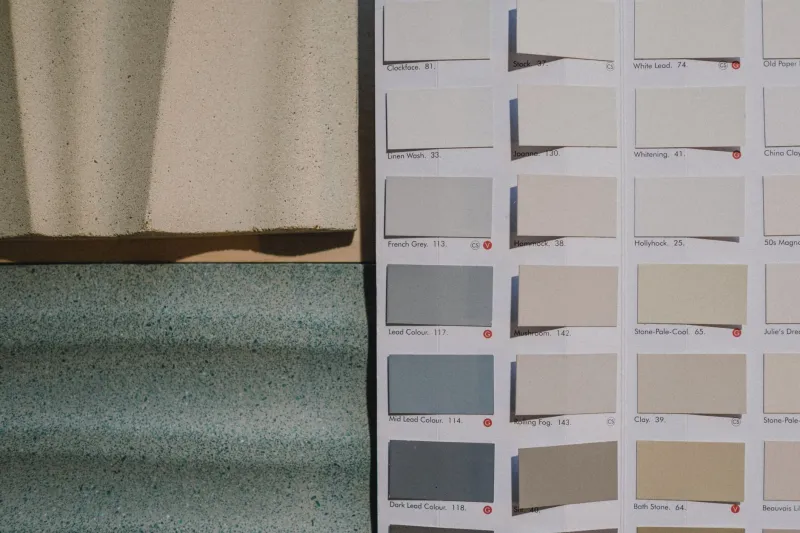
Showroom lighting is generous. Display slabs are often sealed, dusted and angled to flatter. That is fine for selling paving, but it is a poor way to choose it. A sample offcut, treated as a small test piece rather than a colour reference, can tell you far more than a glossy display ever will. The trick is knowing what to ask it.
Get the Right Kind of Sample
Start by asking for a production offcut, not a display board. You want the same thickness, finish and batch as the slabs you will receive. If the supplier cannot tell you the batch, ask them to find out. A sample pulled from a current pallet is worth ten showroom pieces screwed to a wall.
Ask whether the sample has been sealed or treated. Many display slabs are. That changes how water sits on the surface, how the colour reads and how it will stain. If the answer is yes, request an untreated piece as well. Two samples from the same batch are better than one: you can keep one clean for reference and abuse the other.
Colour Is a Moving Target
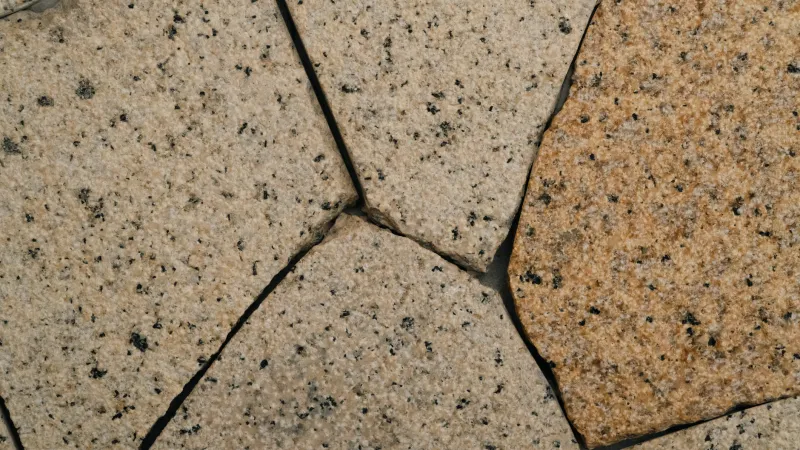
Paving is not paint. Natural stone varies across a quarry, and porcelain can vary between production runs. A sample shows you a slice of that range, not a guarantee. View it in daylight, not under strip lights. Put it on the ground where the patio will go, look at it in shade and sun, and compare it with nearby brickwork, render or fencing.
Wet the surface and watch what happens. Many sandstones darken considerably when damp, which is fine if you expect it and irritating if you do not. Porcelain usually changes less, but textured finishes can hold a film of water that alters the look. If colour consistency matters, ask to see several slabs from the same batch, not one cherry-picked offcut.
The Wet and Dry Feel Test
Slip resistance is not something you can judge from a dry sample under a roof. Wet half the slab and leave half dry. Run your hand across both, then walk on it in the shoes you actually wear in the garden. This is not a laboratory test and it does not replace a proper slip rating, but it will tell you whether a honed porcelain feels greasy or a textured surface feels reassuringly grippy.
Leave the sample outside through a few rain showers. Watch where water pools, how quickly it drains and whether the surface dries evenly. A slab that stays damp for hours is not necessarily faulty, but it is useful to know before it becomes your patio.
Stains, Grime and Efflorescence
A clean sample tells you very little about weathering. Put the offcut somewhere real: under a gutter drip, beside a planting bed, or on the lawn for a week. Drop a little cooking oil on it, smear some wet soil across it, and leave a few leaves on the surface. Then clean it with the sort of patio cleaner you would normally use.
Natural stone is more likely to show staining and efflorescence than porcelain, but the sample will give you a hint. Wet it thoroughly, let it dry in the sun, and look for white bloom. That powdery salt deposit is common on new sandstone and can recur. It is not usually a disaster, but it is better to know now than to be surprised later.
When a Sample Is Too Small or Too Clean
A 300mm offcut is handy, but it is not the whole story. It will not show you the full pattern repeat on a large-format porcelain, the edge chipping that can happen across a pallet, or the shade shift between slabs. It also cannot tell you how a whole patio will look when laid in a bond. For those things you need photographs of the actual batch, a visit to the yard, or a conversation with the supplier about what is in stock.
Beware the sample that is suspiciously perfect. Factory-fresh, sealed and handled with gloves, it may bear little resemblance to the slabs that arrive on a pallet. Ask for a production sample with an honest edge. If the supplier cannot provide one, that is information too.
Before You Order the Full Patio
Keep the sample. Write the batch number on the back and store it somewhere dry. When the delivery arrives, compare a few slabs against it before the contractor starts laying. Order a spare box or a few extra slabs from the same batch, because matching a small repair later is much harder than storing a handful of spares now.
If you are using a contractor, ask for the batch reference in writing. It is a small detail that saves a lot of arguing if the next pallet looks different. A sample test will not answer every question, but it will answer the expensive ones. Spend a week with the offcut before you spend the money on the patio.